How to perform test
Vitamin D | Unimed
Video tutorial for Vitamin D by Unimed
*text instructions below
Supplies overview
- 1x Vitamin D Test Cassette
- 1x Fixed-Volume Capillary Pipette
- 1x Sterile Lancet
- 1x Desinfection wipe
- 1x Buffer Solution Tube
- 1x Igloo Reader
- 1x Unimed Adapter
Included in test box:
- 1x Vitamin D Test Cassette
- 1x Fixed-Volume Capillary Pipette
- 1x Buffer Solution Tube
Additionally needed to perform test:
- 1x Sterile Lancet
- 1x Desinfection wipe
- 1x Igloo Reader
- 1x Unimed Adapter

Text instructions
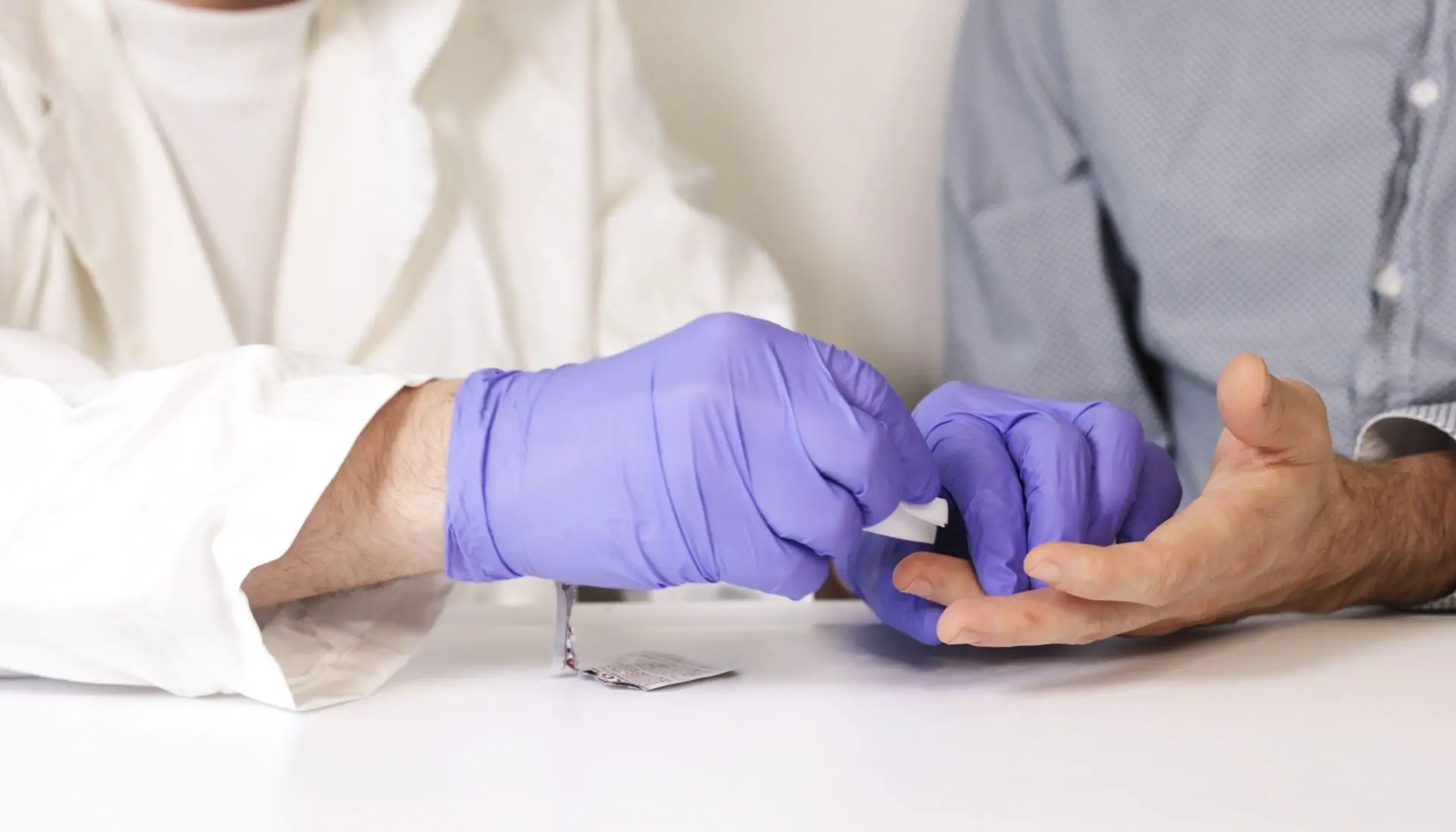
STEP 1: Prepare and Disinfect the Sampling Area
Lay out all kit components. Disinfect the fingertip with the alcohol swab and let it dry.
Warm hands make blood sampling easier! Allow the test subject to warm their hands beforehand with a warm cloth, warm water, or by gently rubbing their hands together.
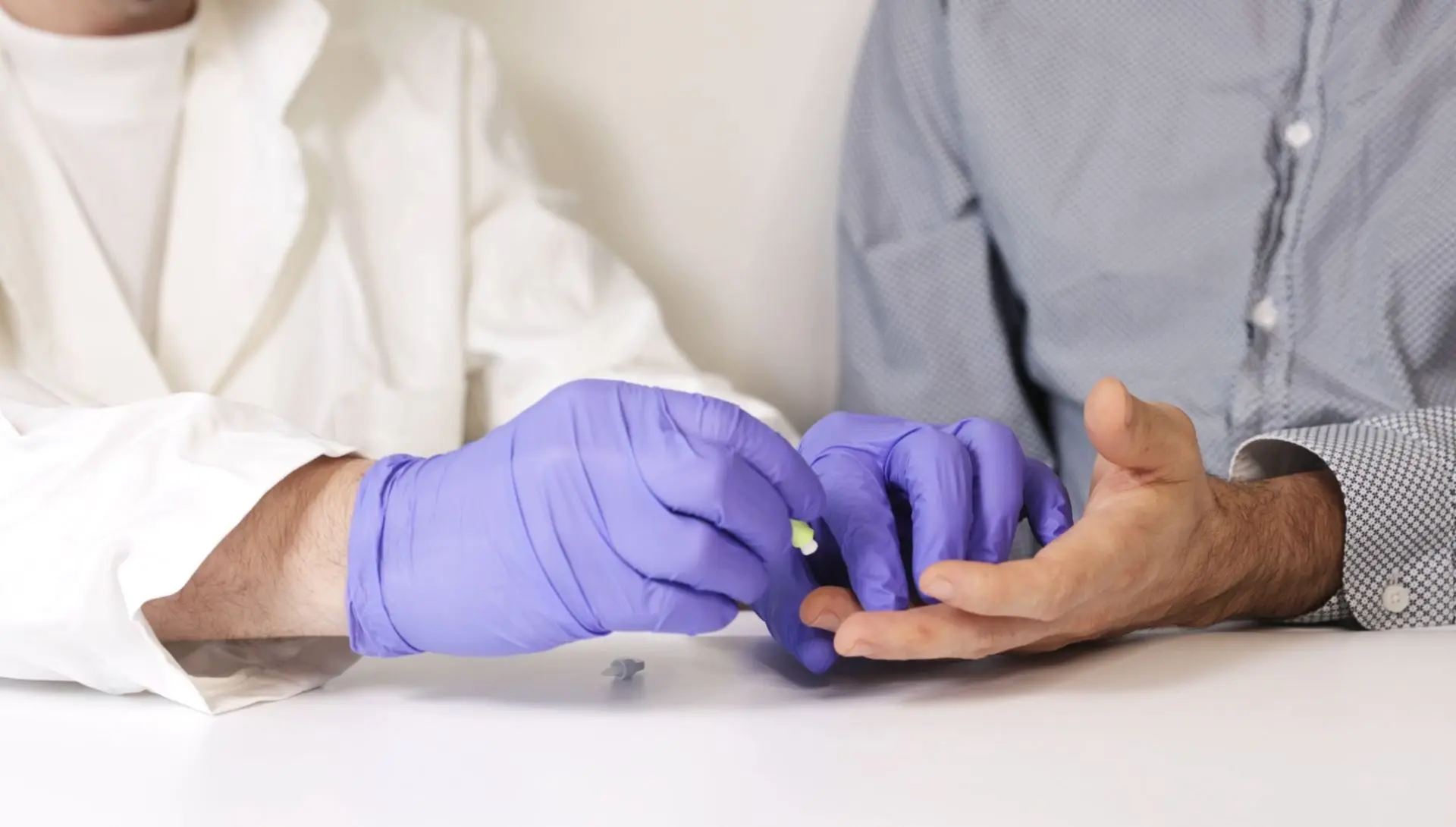
STEP 2: Perform a Fingerstick
Use the sterile lancet to puncture the side of the fingertip. Gently massage the finger to form a blood drop.

STEP 3: Remove the first droplet of blood
Wipe away the first drop of blood with a sterile swab before collecting the sample. This ensures accuracy and prevents contamination.
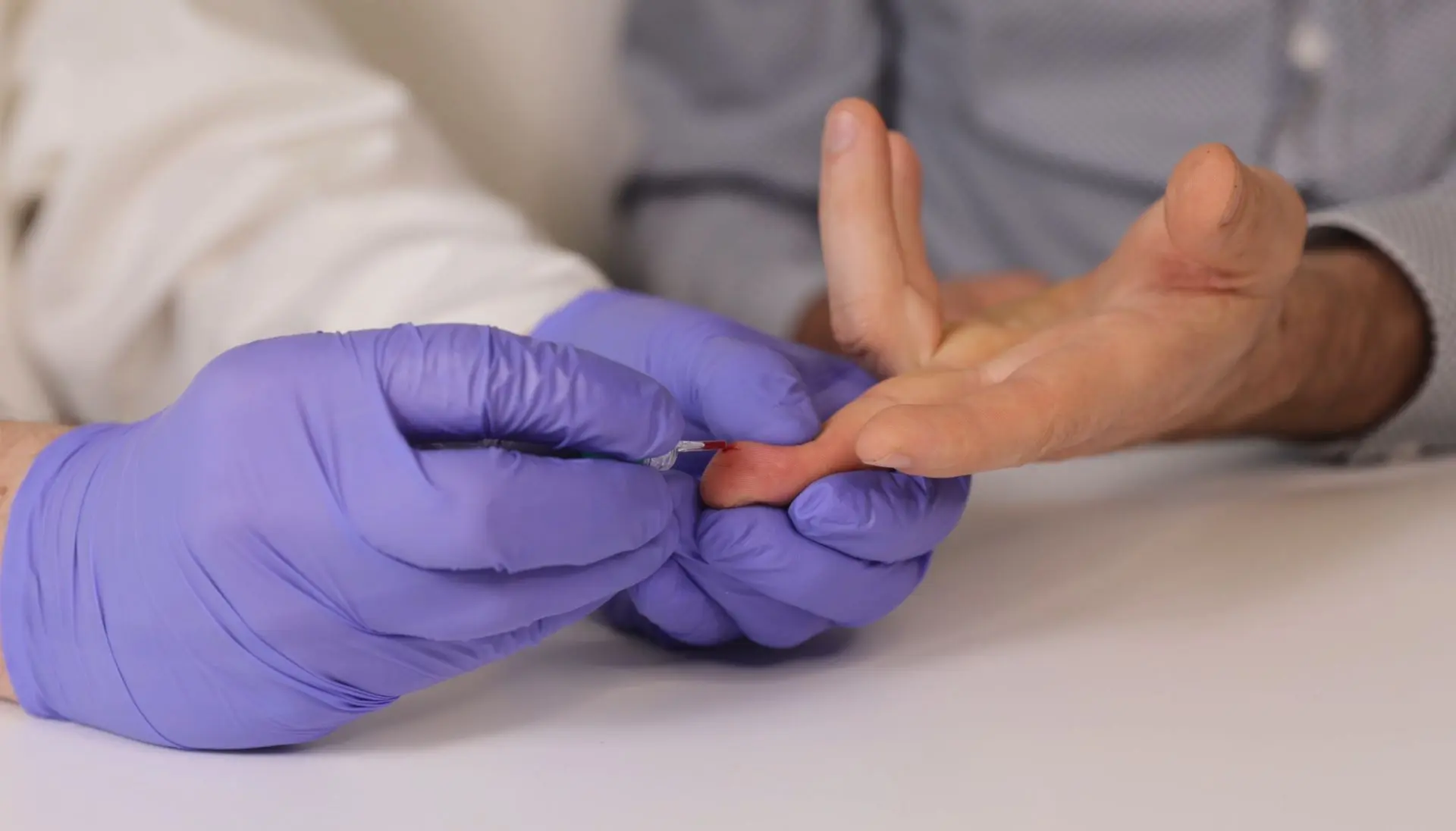
STEP 4: Collect exactly 10 µL of blood
The blood will fill the pipette automatically by capillary action.
Important: Ensure the blood sample is collected properly.

Important
Make sure you have collected exactly 10 µL of blood.

STEP 5: Insert blood collector into tube
Insert blood collector into buffer solution tube and close firmly.
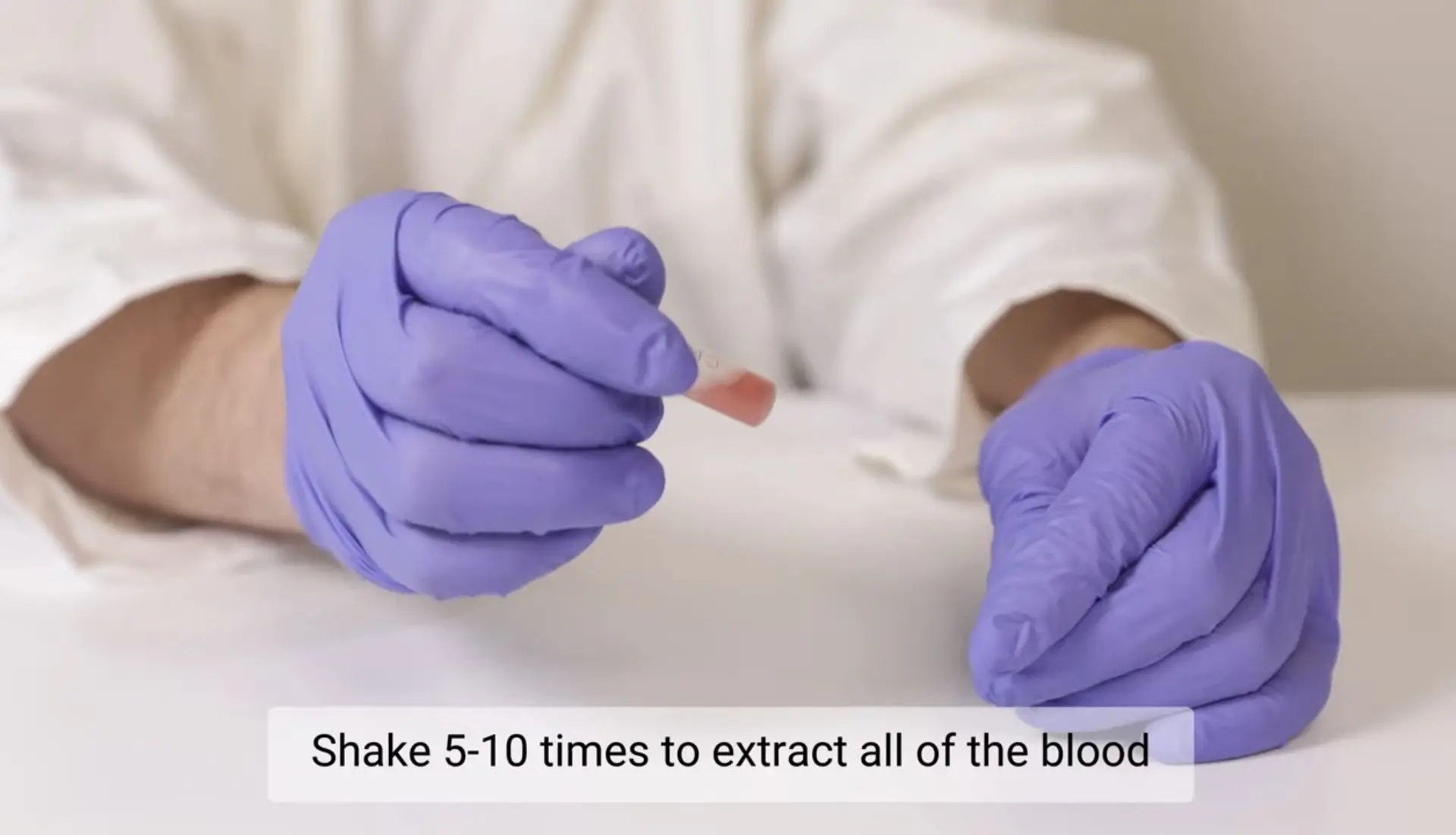
STEP 6: Mix the blood with the buffer
Shake 5–10 times to ensure proper mixing.
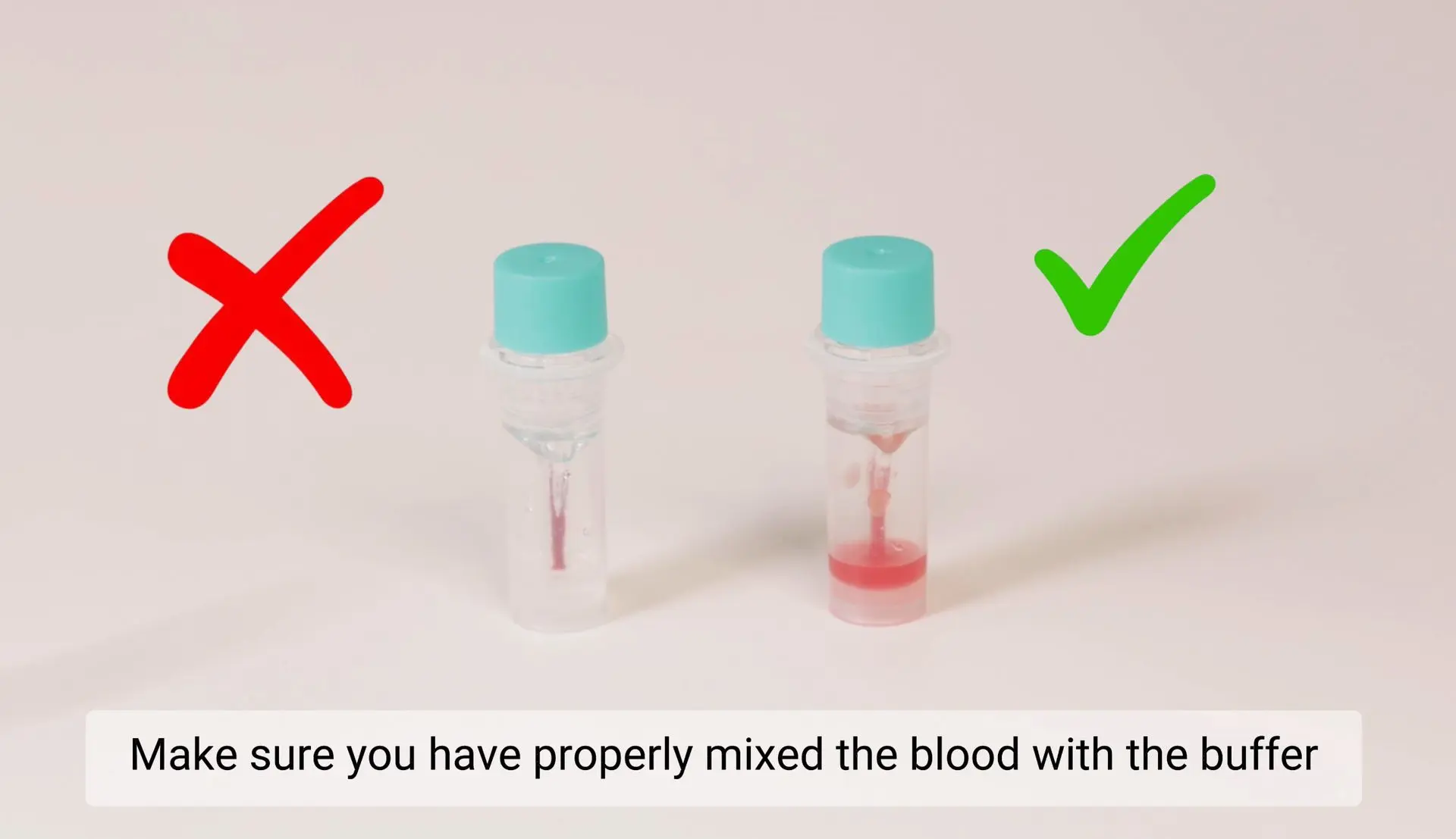
Important
Make sure the blood and buffer are well mixed.

STEP 7: Prepare the test cassette
Add 3 drops of the mixed sample into the test cassette

STEP 8: Start using the device
Turn on the device using the power button located underneath.
Once the device is on, press “New Measurement” and enter the required data to begin the test.
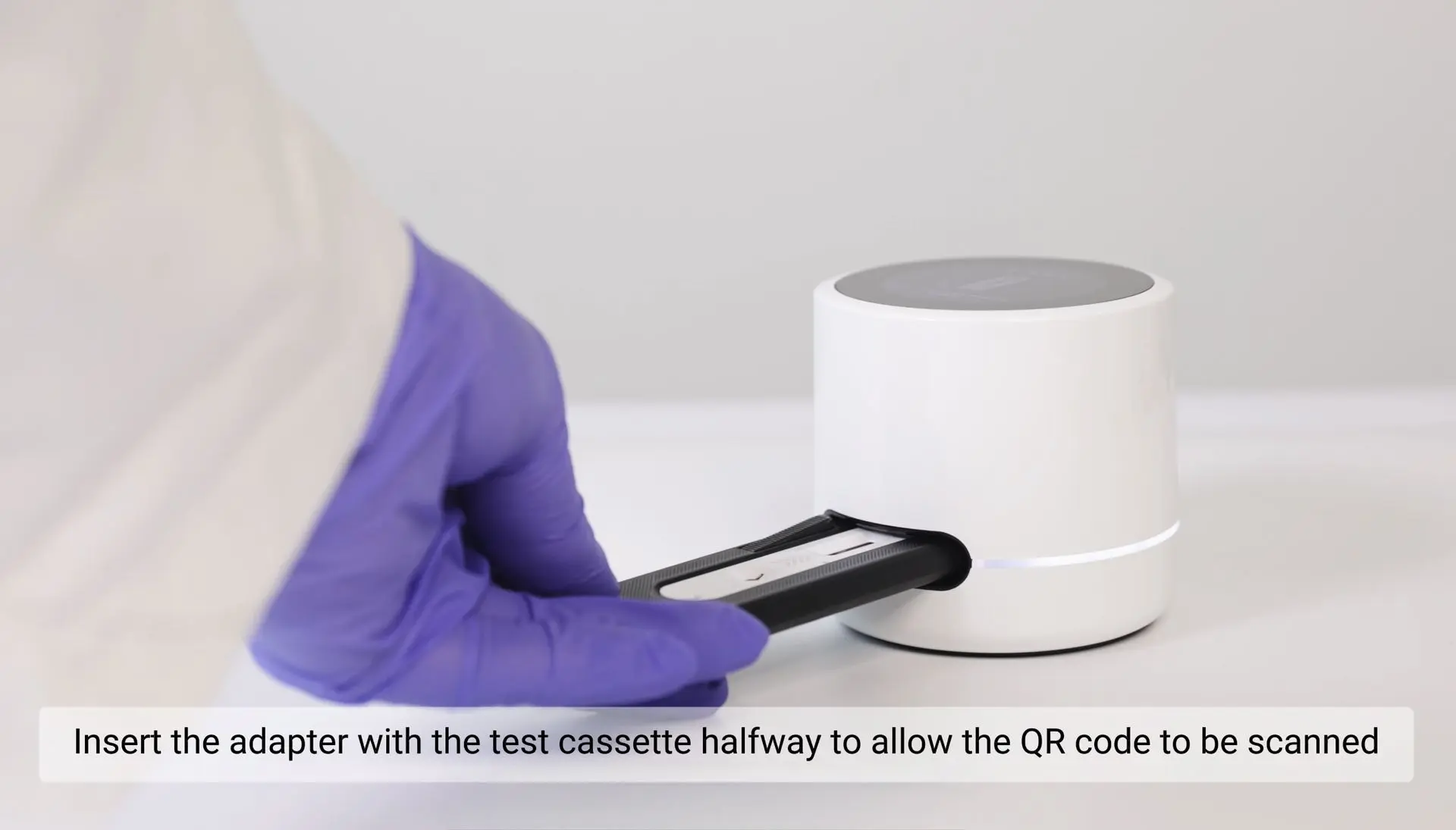
STEP 9: Insert the test cassette into the reader
Insert the test cassette into the reader — the measurement will start automatically.

STEP 10: Wait 15 minutes
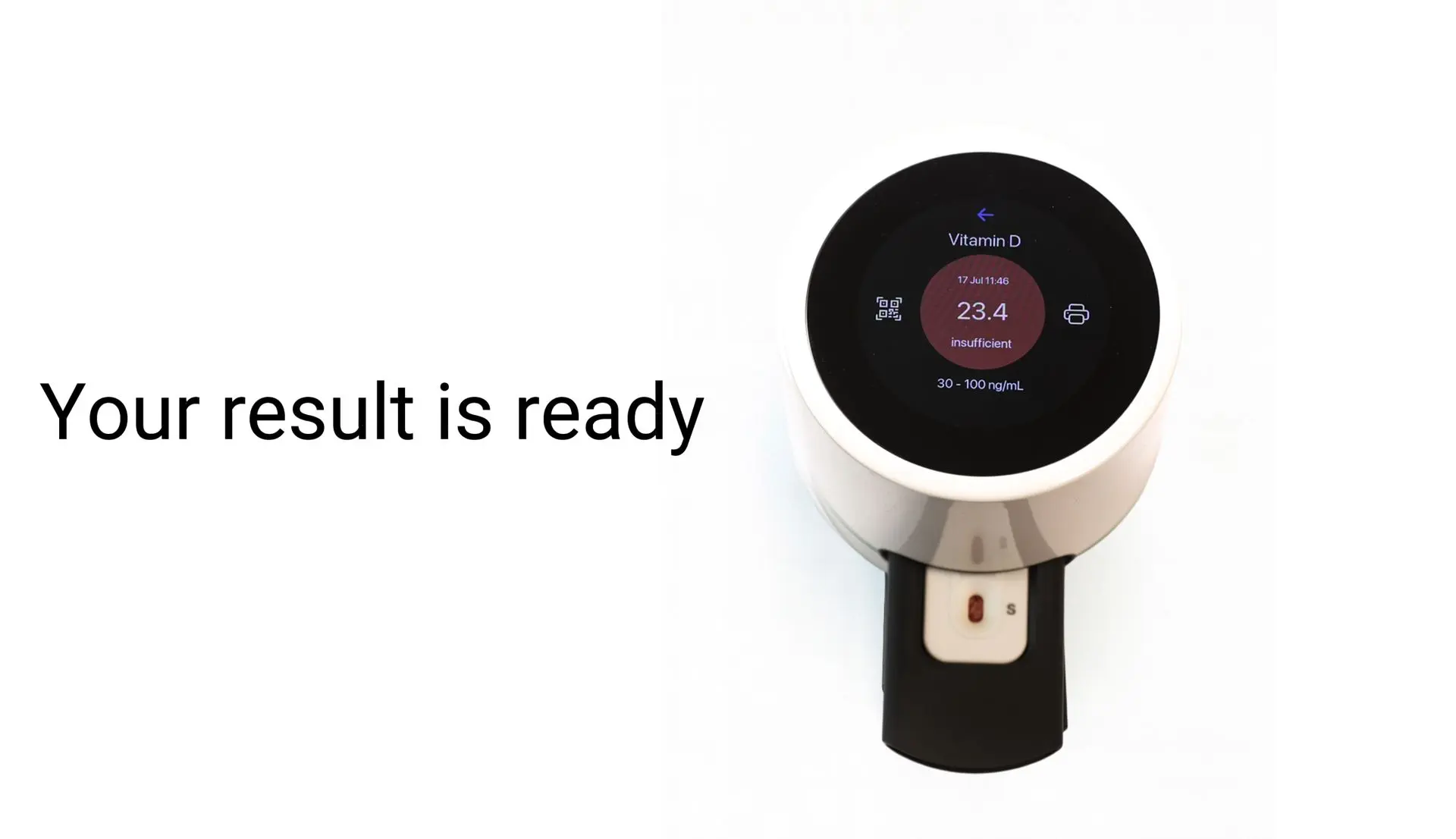
STEP 11: Result is ready
When the timer ends, your result will be displayed on the screen.

Scan QR for quick results on your phone in PDF form
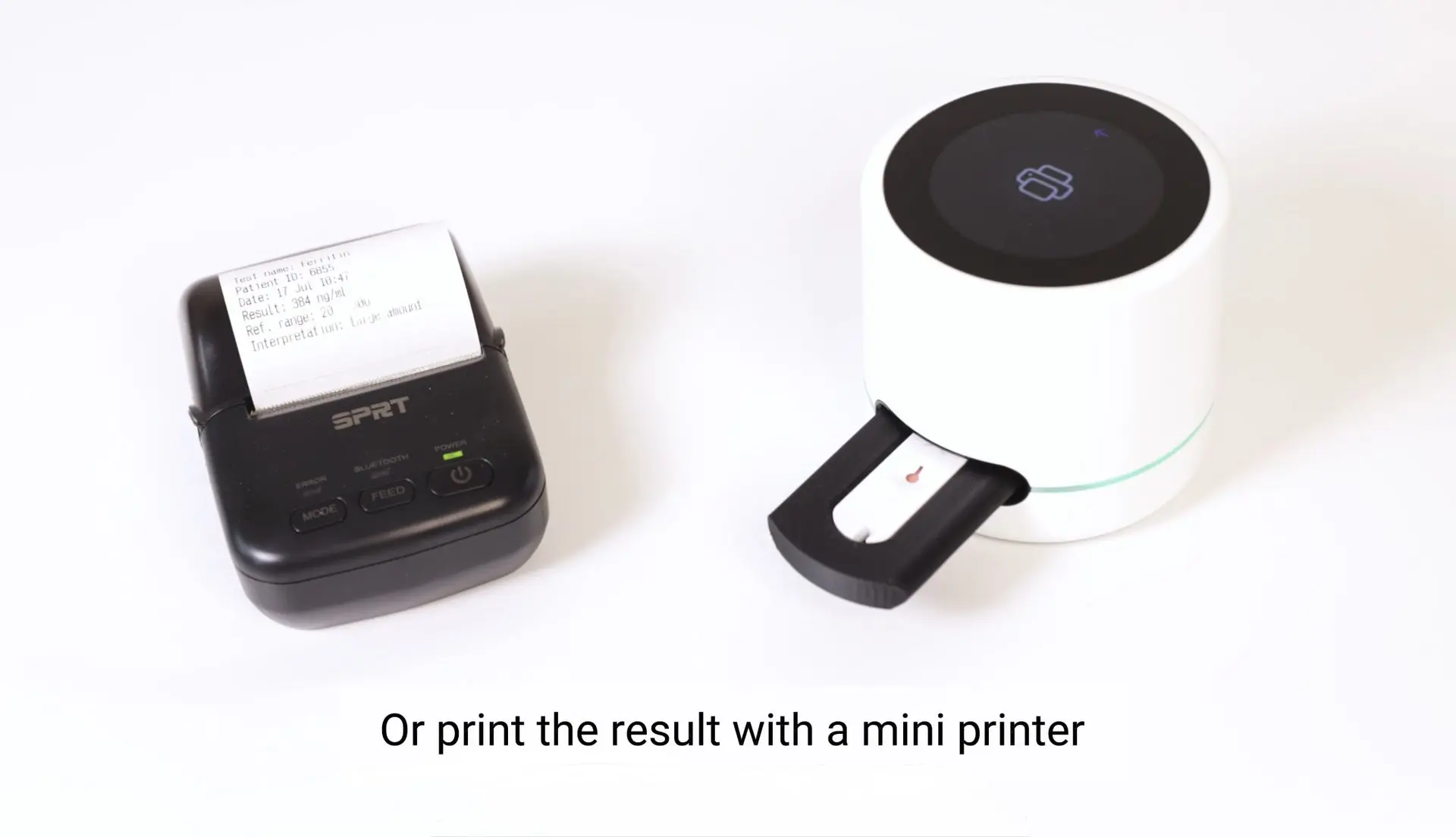
Or print the result with a mini printer
Results evaluation
Rapid vitamin D tests may differ slightly from laboratory results - this is normal and does not indicate a faulty device. Use the following ranges to explain results clearly to customers and guide appropriate next steps.
Result: Error / No control line
What it means: Test did not run correctly.
How to explain/action: Repeat the test. If the issue persists, check sample and instructions.
Result: < 10 ng/mL
What it means: Vitamin D levels - deficient.
How to explain/action: Advise medical consultation for defining the cause of deficiency, further supplementation and treatment.
Result: 10 – 30 ng/mL
How to explain/action: Recommend seeing a healthcare professional for supplementation advice and lifestyle changes (e.g., more sun exposure).
Result: 30 – 100 ng/mL
What it means: Vitamin D levels - sufficient.
How to explain/action: Reassure customer; maintain healthy habits, routine monitoring.
Result: 100 - 150 ng/mL
What it means: Vitamin D levels - excess, but not toxic.
How to explain/action: Recommend consulting healthcare provider to review supplementation and diet.
Result: > 150 ng/mL
What it means: Potentially toxic level of vitamin D.
How to explain/action: Recommend urgent consultation with a healthcare provider.
*Sufficient levels vs clinical target levels of vitamin D
Because guidelines differ, there is no single universal target. Anyone looking for a personal target level should talk to a healthcare professional, since the right value depends on age, health status, and individual circumstances.
Key points to keep in mind:
- Variation between tests: Vitamin D results can vary across different testing methods and labs. Differences in assay types (immunoassay vs. LC‑MS/MS) may cause discrepancies - this doesn’t necessarily mean vitamin D status has changed.
- Daily and day‑to‑day fluctuations: Vitamin D levels can vary throughout the day and on different days, with levels often higher midday and lower in mornings or evenings.
- Seasonal and environmental factors: Sunlight exposure, season, diet, and supplementation influence vitamin D levels.
- Biological variability: Individual factors like body weight, genetics, and binding proteins can affect results.
- Testing conditions: Proper sample handling and storage are critical to accuracy.
- Complete (100%) PRE-MIXING of finger-prick blood with sample buffer is EXTREMELY important and CRITICAL Step to get correct result.
- Incomplete mixing of Blood with Buffer means Sample Preparation has been compromised, and the test result is likely to show lower values.
Read more about Vitamin D and about results evaluation.
Disposal instructions
- Dispose of used cassettes, pipettes, and lancets as biohazardous waste.
- Do not reuse any test components.
- Reader and adapter are reusable; clean according to the official maintenance guide.
Literature
- NIH Office of Dietary Supplements - Vitamin D: Health Professional Fact Sheet.
- NIH Office of Dietary Supplements - Vitamin D: Consumer Fact Sheet.
- NIH Office of Dietary Supplements - Vitamin D Standardization Program (VDSP).
- French CB et al. 25-Hydroxyvitamin D variability within-person due to diurnal rhythm and illness: a case report. J Med Case Rep. 2019 Feb 4;13(1):29. doi: 10.1186/s13256-018-1948-9.
- Holick et al., Evaluation, treatment, and prevention of vitamin D deficiency: an Endocrine Society clinical practice guideline. J Clin Endocrinol Metab, 2011
- Płudowski et al., Clinical Practice in the Prevention, Diagnosis and Treatment of Vitamin D Deficiency: A Central and Eastern European Expert Consensus Statement. Nutrients, 2022; doi: 10.3390/nu14071483
- Holick, MF. Vitamin D statues: Measurement, Interpretation and clinical application. Ann. Epidemoil. 2009, 19(2):73-78.
- Morris HA. Vitamin D: A Hormone for All Seasons – How much is enough? Clin. Biochem. Rev., 2005, 26:21-32.
- Moyad MA. Vitamin D: a rapid review. DermatolNurs. 2009, 21:25-30
- Zerwekh JE. Blood biomarkers of vitamin D status. Am J. ClinNutr. 2008, 87:1087S-91S
- Schöttker B, etal.Vitamin D and mortality: meta-analysis of individual participant data from a large consortium of cohort studies from Europe and the United States. BMJ. 2014, 348:g3656
- Jenkinson C et al. High throughput LC-MS/MS method for the simultaneous analysis of multiple vitamin D analytes in serum. Chromatogr B AnalytTechnol Biomed Life Sci 2016 Mar 1;1014:56-63.
Disclaimer
This information is educational and does not qualify as medical advice. Always use local reference ranges and consult a healthcare professional for diagnosis and treatment.